As teachers, we’ve all had this experience: you’ve taught a concept, your students seem to “get it,” and you move on, only to discover weeks later that they don’t remember it at all. Frustrating, right?
The truth is, most kids don’t learn something after one exposure. They need time, repetition, and multiple opportunities to revisit and apply what they’ve learned in different contexts. That’s where a spiral approach comes in.
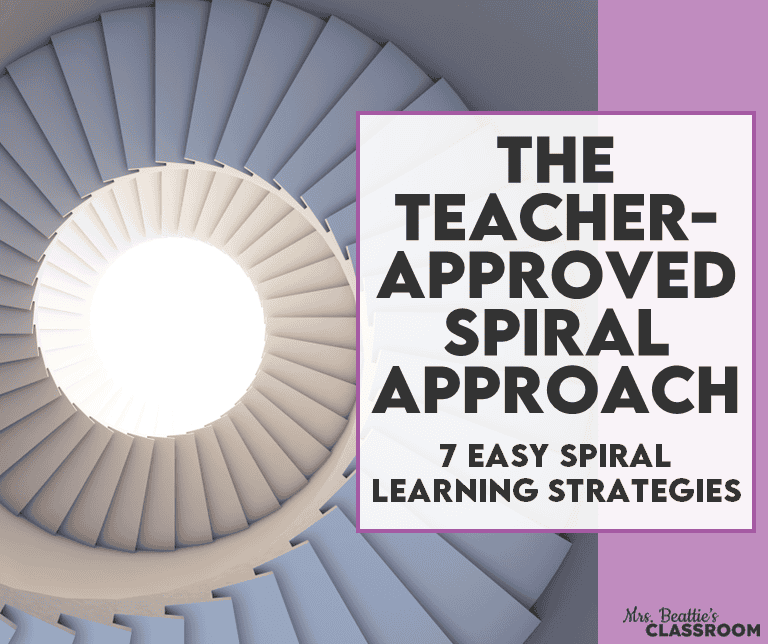
Spiral learning isn’t about “reteaching” because students didn’t learn it the first time. Instead, it’s about intentionally looping back to important concepts over time, each time building a deeper understanding.
In this post, I’ll share:
- What spiral learning is
- Why a spiral approach is so powerful for long-term retention
- Practical ideas for spiraling any content area
- An example of how it works beautifully for teaching Greek and Latin roots
What is Spiral Learning?
Spiral learning means you revisit key concepts throughout the year, each time at a deeper level or in a new context.
Instead of a linear model – teach it, test it, and never look back – a spiral approach ensures that ideas don’t slip away. Imagine it like climbing a staircase: each time you circle back, you’re not standing in the same place. You’re higher up, with a stronger foundation to stand on.
For example:
- Math: Students might solve basic fraction problems early in the year, then revisit fractions later with word problems, and again with geometry.
- Reading: Students might first learn how to infer in a short story, revisit it in nonfiction, and then apply it while analyzing character motivation in a novel.
This layered spiral learning makes knowledge stick.
One long-standing practice that doesn’t align with a spiral approach is the weekly spelling test. If you’re still doing them, it’s time to stop and consider why and what students are getting out of this practice.
Why a Spiral Approach Works
Learning is a lot like planting seeds. You can scatter them once and hope something grows, or you can water, fertilize, and tend to them over time to see a strong plant develop. A spiral approach is that ongoing tending, the repeated exposure and practice that helps students internalize new skills.
Research backs this up. Strategies like retrieval practice (bringing information back to mind after some time has passed) and the spacing effect (spreading learning out over intervals) both point to spiral learning as a highly effective way to strengthen memory.
And the best part? A spiral approach doesn’t require a ton of extra prep! It’s about building regular review into what you’re already doing.
The Benefits of Spiral Learning
There are so many reasons spiral learning is worth considering. Here are the ones that have made the biggest difference in my classroom:
1. Improved Retention and Mastery
We’ve all seen it: students ace a test on Friday but draw a blank two weeks later. (Remember those spelling tests I mentioned earlier…?!) A spiral approach solves that problem. By revisiting a concept multiple times, students move information from short-term memory into long-term memory.
Think about teaching the root spect. The first time, students might only recognize it in the word spectator. When they see it again weeks later in inspect or respect, their understanding deepens. With repeated practice, they begin to recognize spect in brand-new words like spectacular or retrospective.
Retention doesn’t happen from a single lesson. Spiral learning provides the necessary reinforcement.

2. Natural Differentiation
In every classroom, some students catch on quickly while others need more time. A spiral approach naturally provides that time without holding anyone back.
- Students who didn’t “get it” the first time have another chance, often with a different activity or in a new context.
- Students who understood early can be pushed deeper with enrichment tasks or more challenging examples.
For example, in a spiraled math review, struggling students might revisit multi-digit multiplication with concrete models, while advanced students extend their knowledge to problem-solving with decimals. Same skill, different levels.
3. Stronger Confidence and Independence
Spiral learning gives students repeated opportunities to succeed. This builds confidence, and we all know that confident students are more willing to take risks.
I’ve seen this most clearly when teaching word study. At first, students struggle to use morphology to break down unfamiliar words. But as roots and affixes spiral back throughout the year, they start spotting patterns everywhere. Suddenly, they’re “word detectives,” excited to announce when they find a root from class in their science or social studies texts.
That kind of independence is gold!
4. Cross-Curricular Connections
A spiral approach naturally highlights how concepts overlap across subjects.
Take the root geo (earth). It shows up in:
- Science: geology, geography
- Math: geometry
- Social studies: geopolitics
- Everyday life: geocache, geode
When students encounter a familiar concept in multiple places, their understanding becomes flexible and transferable. They’re no longer memorizing in isolation. They’re building a network of knowledge that applies everywhere!
This is especially true with morphology. A student who knows how to break down a word like autobiography (auto = self, bio = life, graph = write) can apply that skill in science, history, or even outside the classroom.

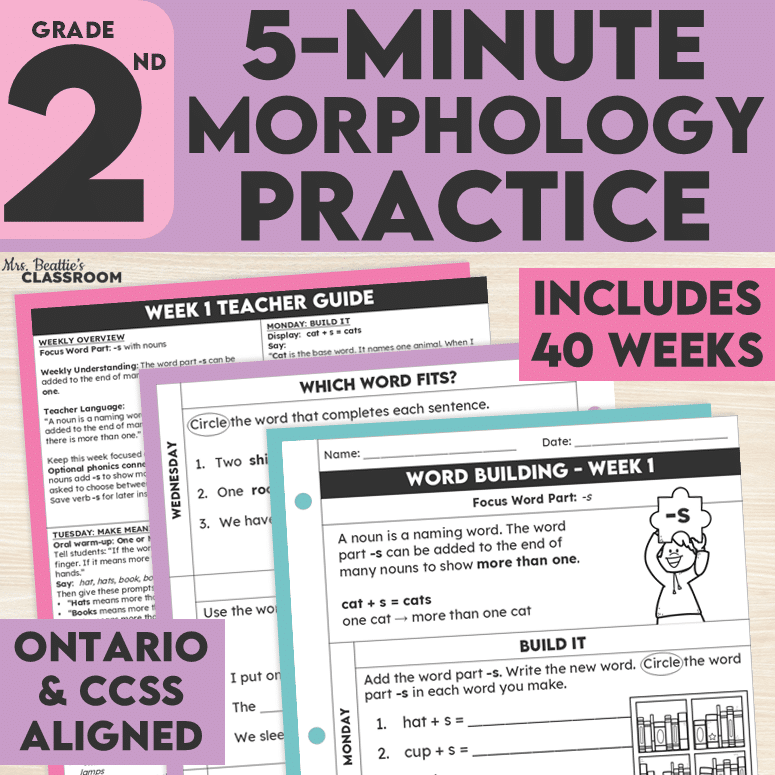
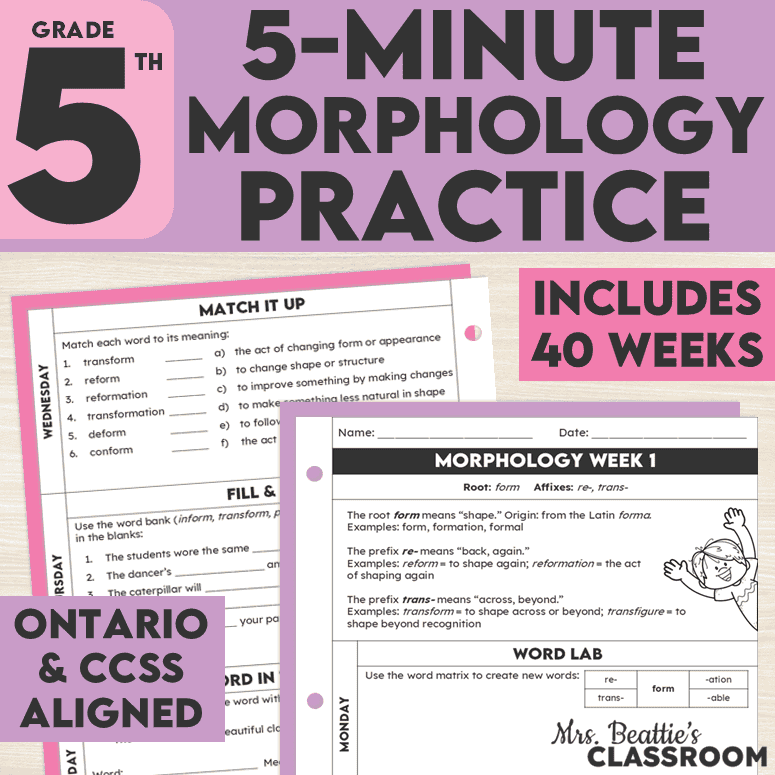
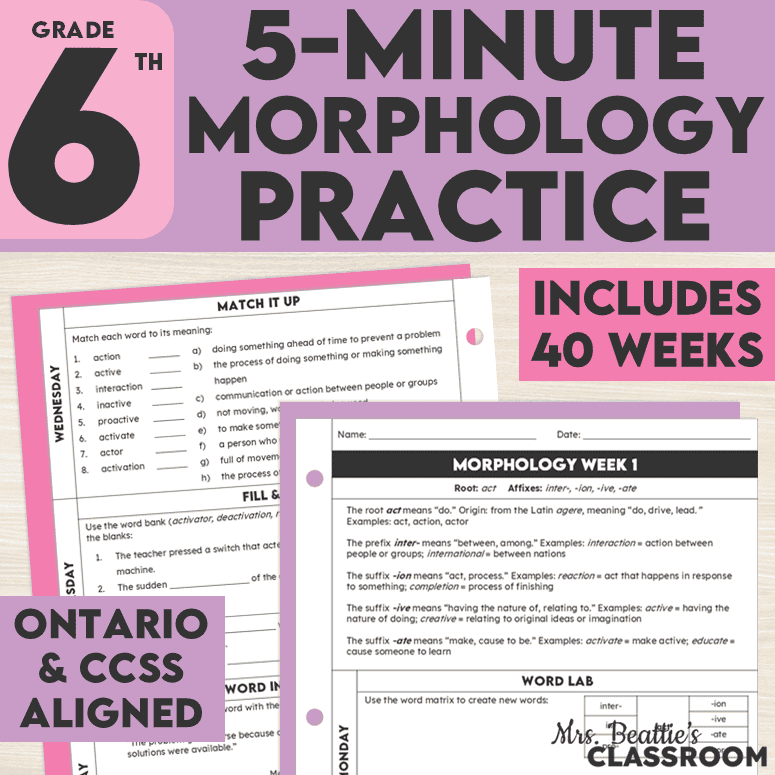
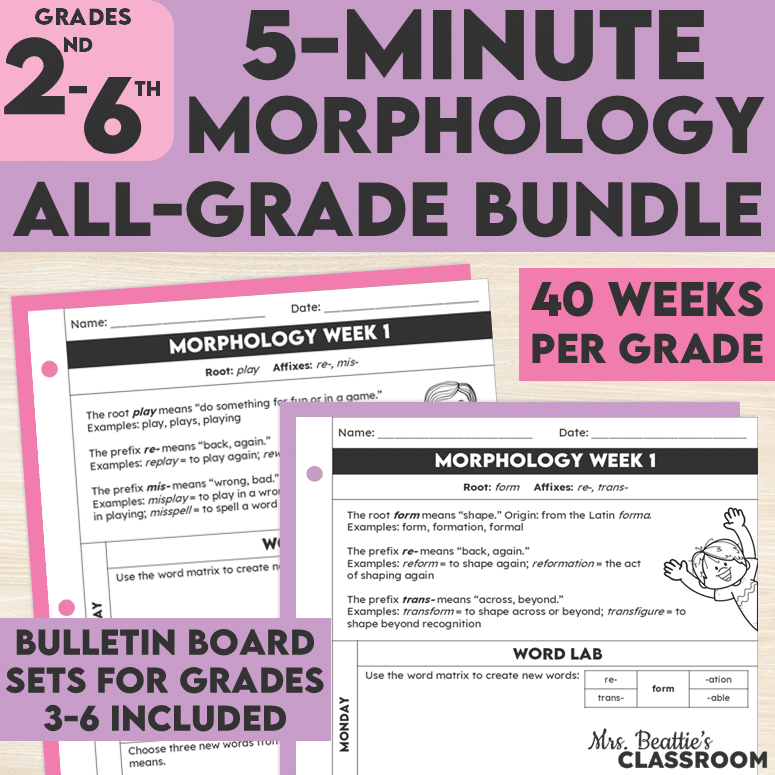
These ready-to-use resources for Grades 2-6 make it easy to apply a spiral approach to vocabulary. Get a copy for your grade level below:
5. Supports Reading Comprehension
Spiral learning doesn’t just help with vocabulary. It also strengthens comprehension skills.
When students repeatedly practice strategies like summarizing, questioning, or making inferences across different texts, those strategies become automatic. Instead of stumbling through a tough passage, they can rely on habits built through spiraled practice.
6. Ongoing Assessment Opportunities
A spiral approach gives teachers a built-in way to check progress without piling on extra tests.
When students revisit skills in warm-ups, exit tickets, or quick review games, you can spot who’s growing and who still needs support. This continuous feedback loop is much more useful than one high-stakes test.
Plus, kids don’t realize they’re being assessed, which takes the pressure off.
Back to those spelling tests… instead of a weekly test on a handful of words students won’t remember on Monday, check that they’re spelling those key patterns correctly in their daily work. They’ll come back to them again and again throughout the year in a natural, authentic way!
7. Higher Engagement and Fun
Let’s be honest: kids enjoy review when it doesn’t feel like review. Spiral learning makes it easy to keep things fresh by varying the activities.
You might revisit a math skill with a digital quiz one week, a hands-on game the next, and a partner problem the following week. In vocabulary, one day might be a word sort, another day a short writing prompt, and another a scavenger hunt for words in independent reading.
The variety keeps engagement high while the repetition builds mastery.

How to Spiral Any Content in the Classroom
Spiral learning isn’t just for word study – it works everywhere. Here are some easy ways to spiral across subjects:
- Math: Revisit problem-solving strategies in daily warm-ups. Mix old and new concepts in cumulative reviews.
- ELA/Reading: Cycle through comprehension strategies (like predicting, inferring, summarizing) with different genres throughout the year. Try oral retellings, graphic organizers, and later digital tools like Padlet or Jamboard.
- Science: Keep the scientific method alive by weaving it into multiple labs, not just one unit.
- Social Studies: Connect past units to new ones with timelines, recurring themes, or vocabulary reviews.
🎯 Tip: Use short, frequent activities (exit tickets, review games, quick writes) to bring old concepts back without overwhelming your schedule.
Spiral Learning in Action: Greek & Latin Roots
One of my favorite ways to use a spiral approach is through Greek and Latin roots. Vocabulary instruction is often taught in a “one and done” style, but spiral learning transforms it.
In my 5-Minute Morphology Daily Practice resources, a spiral approach is built right into the design:
- Weekly Cycles: Each week follows the same five-day pattern: students build words on Monday, predict meanings on Tuesday, match definitions on Wednesday, apply in context on Thursday, and review on Friday. This predictable structure makes the practice quick, consistent, and meaningful.
- Spiraled Roots & Affixes: Roots and affixes don’t disappear after one week. They come back in later activities, Friday review prompts, and special Review Weeks (10, 20, 30, and 40). That way, students encounter familiar parts again and again, each time in new contexts.
- Layered Understanding: For example, when teaching the root spect (“see, look”), students first notice it in words like inspect and spectator. Later, it appears again in new forms like reinspect or spectacular. Over time, students recognize the pattern in unfamiliar words, building true independence.
- Short, Daily Practice: Because the activities are only a few minutes long, spiral learning happens without overwhelming your schedule. Students get repeated exposure in manageable doses – the key to long-term retention.
By the end of the year, students don’t just memorize a list of words. They internalize the meaning of the roots themselves, giving them tools to unlock hundreds of new words across subjects.
🎯 This is exactly why I created my 5-Minute Morphology resources. With 40 weeks of daily practice and built-in review, it gives students repeated, structured exposure that makes vocabulary stick.
Ready to make spiral learning part of your daily word study? These full-year morphology resources have everything you need:


Resource Roundup: Spiral Learning in Grades 2-6
If you’d like to extend spiral learning beyond vocabulary, I also have a resource designed to keep reading comprehension strategies fresh all year long. This resource cycles through skills like predicting, questioning, and summarizing across multiple genres, so students keep practicing without it ever feeling repetitive.
It’s a powerful way to build habits that stick, and it pairs beautifully with a spiral approach to vocabulary instruction. Want to spiral comprehension strategies across the year? These reading response prompts make it simple and consistent:

Teaching younger students? Teaching younger students? These mini books are perfect for spiraling key comprehension skills again and again with different texts:

Challenges (and Simple Solutions)
- “I don’t have time to create spiral learning activities.”
→ Solution: Build review into warm-ups, centers, and exit tickets. Or use ready-made resources with a spiral approach built in. - “How do I track growth?”
→ Solution: Use quick checks during review (journals, mini-quizzes, partner shares). With spiral learning, assessment happens naturally over time.
Final Thoughts
A spiral approach takes the pressure off “teaching it once and moving on.” Instead, it creates a learning environment where concepts grow stronger with each revisit.
Whether you’re using spiral learning in math, reading, science, or vocabulary, the benefits are clear: better retention, more confidence, stronger cross-curricular connections, and higher engagement.
Start small! Add spiral review to your warm-ups, or revisit a key strategy in a new unit. Over time, you’ll see the payoff in student understanding and independence.
And if you’d like a ready-to-go way to spiral vocabulary instruction, my Greek and Latin Roots resource is designed with this approach in mind. Your students will love becoming “word detectives” as the roots pop up again and again throughout the year!
🎯 Don’t forget to pin this post for later, and share it with a teacher friend who’s looking for ways to make learning stick.